Moazam Opinion
The AI Boom Comes With a Hidden Cost
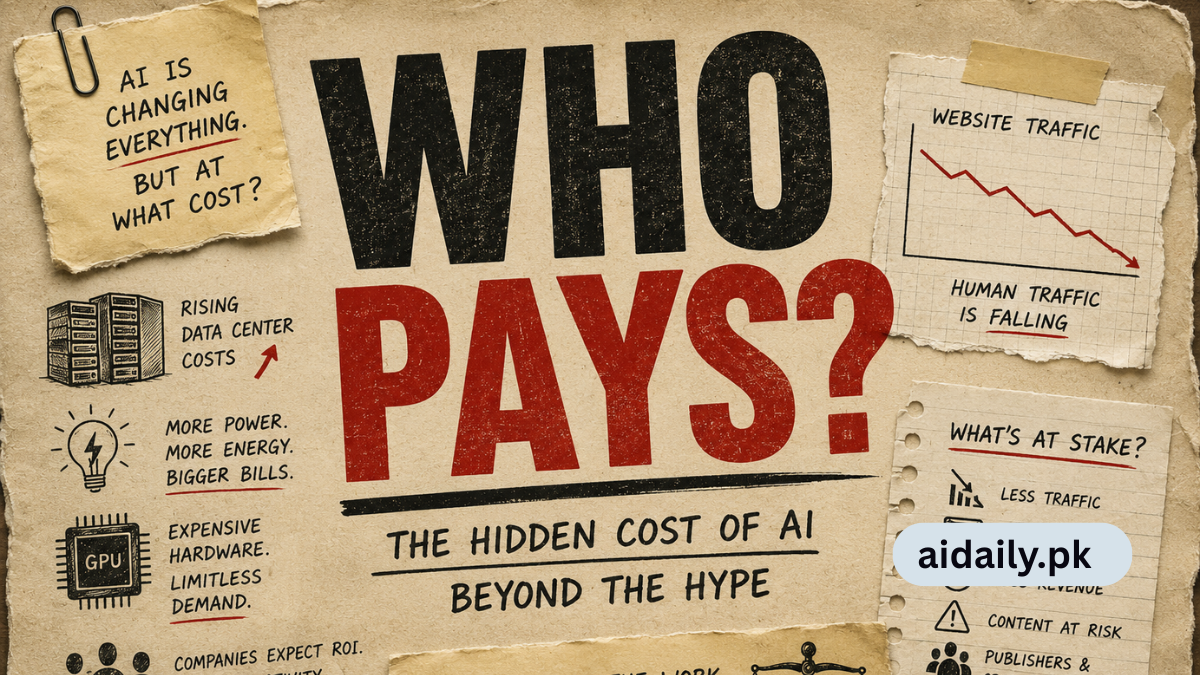
For the past few years, artificial intelligence has been sold as the ultimate productivity revolution. Companies adopted AI to reduce costs, employees used AI tools to work faster, and startups built entire businesses around AI-powered workflows. During the early wave of adoption, most users paid a simple monthly subscription and could use their AI tools without worrying too much about usage limits. That era is beginning to change. Today, more AI providers are moving toward usage-based pricing models where costs depend on tokens, API calls, agent actions, and computing power. While AI is becoming more powerful, it is also becoming more expensive and less predictable. In my view, this raises a much bigger question than model performance: Is the AI economy actually sustainable?
The Shift From Fixed Pricing to Usage-Based Costs
One of the biggest concerns for businesses is budgeting. A company can easily calculate the cost of traditional software subscriptions because the monthly expense is predictable. AI changes that equation. The more employees use AI, the higher the bill can become. A single team member running complex workflows or large AI agents can consume significantly more resources than expected. Many companies initially adopted AI because they believed it would reduce operational costs, but unpredictable AI expenses could create a new financial challenge. If organizations cannot accurately forecast their AI spending, the promise of lower costs becomes much less attractive.
AI Runs on Massive Infrastructure, Not Magic
Most people interact with AI through a chatbot interface and rarely think about what happens behind the scenes. However, AI is powered by some of the most expensive infrastructure ever built. Large language models require enormous GPU clusters, advanced cooling systems, high-speed networking, and massive data centers operating around the clock. These facilities consume huge amounts of electricity and require billions of dollars in investment. As AI adoption grows, infrastructure demands grow alongside it. The conversation is no longer just about software innovation; it is increasingly about energy, computing resources, and who will ultimately pay for them.
AI Agents Could Disrupt the Internet’s Business Model
A much larger issue may be emerging beneath the surface. Today, when a person wants to buy a product, they typically visit several websites, compare options, read reviews, and interact with advertisements along the way. Website owners earn revenue through advertising, affiliate links, and sponsored content. AI agents change this behaviour. Instead of visiting five websites, an AI agent may scan fifty websites, summarise the information, and provide a final answer directly to the user. The user gets convenience, but the websites lose traffic. Less traffic means fewer ad impressions, fewer affiliate clicks, and lower revenue for publishers. If AI agents become the primary way people access information, the economics of the web could change dramatically.
The Internet Depends on Human Attention
The modern internet is largely funded by advertising. News sites, blogs, forums, creators, and independent publishers all rely on human visitors viewing content and engaging with ads. AI agents do not behave like humans. They do not click banners, watch sponsored videos, or respond to marketing campaigns. They simply gather information and move on. This creates a difficult question for the future. If human traffic continues to decline while AI-generated traffic rises, how will websites generate enough revenue to survive? The internet has always depended on human attention. An internet dominated by AI agents may require an entirely new economic model.
The Growing Problem of AI-Generated Content
Another challenge receiving less attention is data quality. AI systems learn from information available online. At the same time, more content than ever is being generated by AI itself. Millions of articles, posts, summaries, and websites are now created with the help of language models. Over time, future AI systems may increasingly learn from content generated by previous AI systems. This creates the risk of lower-quality training data, reduced originality, and a web filled with repetitive information. As synthetic content grows, genuinely human experiences, original reporting, and real-world expertise may become some of the most valuable assets on the internet.
Productivity Promises vs. Reality
AI was expected to deliver dramatic productivity gains across industries. While there are certainly examples of businesses benefiting from AI, the results have not been as universal as many expected. Numerous executives report that measuring AI’s return on investment remains difficult. Some organisations have achieved impressive efficiency improvements, while others are still struggling to justify the cost. This does not mean AI has failed. It simply means that the gap between AI hype and business reality is larger than many people anticipated. Technology alone does not guarantee productivity; successful implementation matters just as much.
My Take: The Biggest AI Challenge Is Economics
I am not anti-AI. I use AI tools regularly and believe they will remain a major part of our future. However, I think the industry is focusing heavily on capabilities while ignoring sustainability. Rising infrastructure costs, increasing energy consumption, unpredictable pricing models, declining website traffic, and uncertain productivity gains all point to the same issue: economics. The next major battle in artificial intelligence may not be about building smarter models. It may be about building a business model that can support the future of AI, the internet, and the people who depend on both.
Final Verdict
Artificial intelligence is transforming the world faster than almost any technology before it. Yet every technological revolution comes with trade-offs. AI may make work faster, automate tasks, and unlock new opportunities, but it also raises serious questions about cost, sustainability, and the future of the internet economy. As we race toward an AI-powered future, one question continues to stand out:
If AI ends up doing most of the work, who will ultimately pay the bill for the internet?
Read More
Thumblytics Review 2026 | Can This AI Tool Improve Your YouTube CTR?
AI Could Add Rs9.7 Trillion to Pakistan’s Economy by 2030 |But Is Pakistan Ready?
Pakistan Is Producing 75,000 IT Graduates a Year | So Why Are AI Jobs Still Going Unfilled?
About The Author
