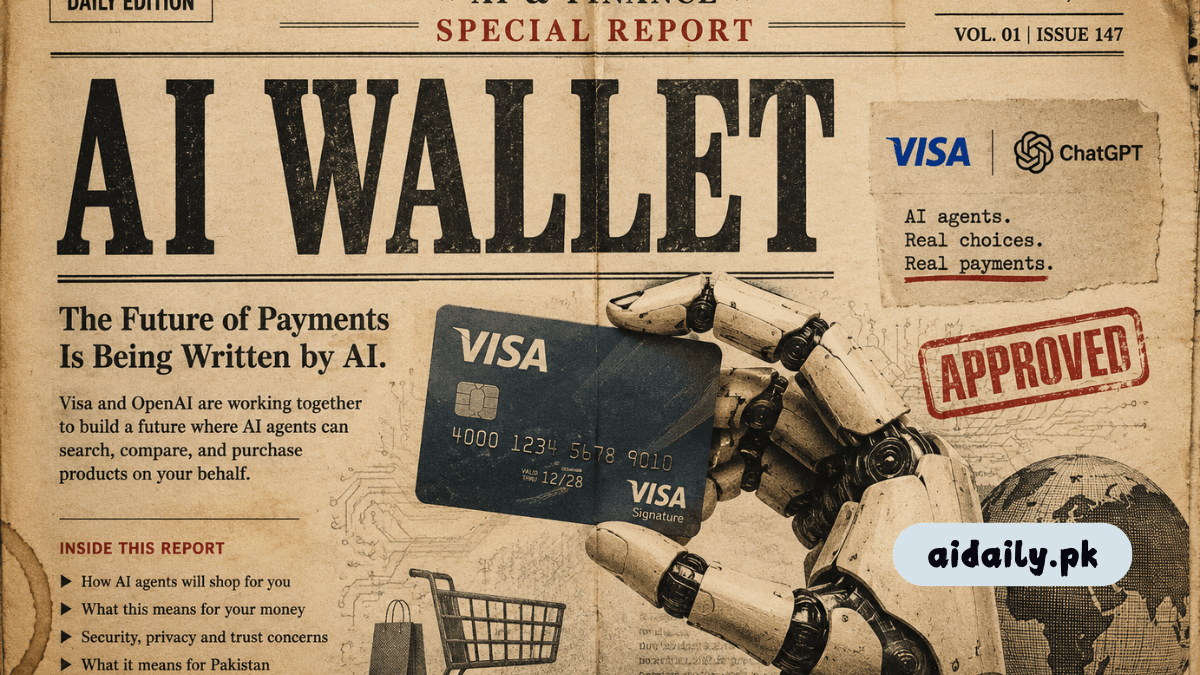
Visa and ChatGPT Want AI to Shop for You
Quick Summary
Honestly, I don’t even know what’s left for us to see anymore. You wake up in the morning and boom — some new AI drama is already happening. Just take today’s news: now AI won’t just answer your questions, it will actually go shopping on your behalf. Visa is working with OpenAI on technology that could allow AI agents to participate in online shopping and payments. The announcement points toward a future where AI does not just answer questions or recommend products—it could help users search, compare, and purchase items on their behalf. While the idea promises convenience, it also raises important questions about trust, security, and the future of digital commerce.
What Happened?
For years, AI assistants like ChatGPT have been used mainly for information. People ask questions, generate content, or get recommendations. The final decision, however, always remains with the user. That may soon begin to change.
Visa’s latest initiative suggests a future where AI agents become active participants in commerce. Instead of simply recommending products, AI could eventually help users find the best option, compare prices across multiple websites, evaluate reviews, and even complete parts of the purchasing process. In simple terms, AI is moving from being a conversation tool to becoming an action tool.
The announcement is significant because payments have always been one of the most sensitive parts of the internet. If AI becomes involved in transactions, it could fundamentally change how people interact with online stores and services.
Why It Matters?
The biggest shift here is not about payments. It is about behaviour.
Today, most online shopping follows the same pattern. A user searches for a product, opens multiple tabs, compares prices, reads reviews, and finally decides what to buy. Depending on the purchase, this process can take minutes or even hours.
AI agents could dramatically reduce that effort. Imagine telling ChatGPT, “Find me the best laptop under $1,000 with at least 16GB of RAM and strong battery life.” Instead of giving you a list of links, the AI could analyse hundreds of options, compare prices, check customer reviews, and prepare the purchase for approval.
That level of automation could make online shopping faster and more efficient than ever before.
The Bigger Trend: AI Agents Are Coming
The Visa announcement is part of a much larger trend unfolding across the AI industry. Companies are increasingly building AI agents that can perform tasks instead of simply generating text.
In the near future, AI agents may book flights, reserve hotels, manage subscriptions, schedule appointments, and handle shopping requests. The goal is to make AI useful not only for information but also for execution.
This is why many technology companies see AI agents as the next major platform after websites and mobile apps. Whoever controls the AI assistant that users trust every day could gain enormous influence over digital commerce.
Pakistan Angle
As a Pakistani, there is no way I’m ever handing my money to AI and saying, “Go shopping for me.” For me, shopping will always be done by my mama — and I’m never letting AI take her place. Next thing you know, tomorrow we’ll find out AI even named us at birth. I’m 101% sure Pakistanis are not going to use this, because in Pakistan, even doing online shopping with a card already feels heavy with taxes. If you eat out somewhere, you have to pay around 18% tax, and people already try to avoid that as much as possible. And now ChatGPT has started this new drama: “AI will shop for you.” Wah g wah, amazing! Pakistan may still be in the early stages of AI adoption compared to larger markets, but the implications are worth paying attention to. Digital payments, mobile banking, and e-commerce have grown rapidly in recent years. Consumers are becoming more comfortable making purchases online, and businesses are investing heavily in digital channels.
For a growing digital economy like Pakistan’s, the arrival of AI commerce could create both opportunities and challenges.
Real Example
For example, in the beginning, people might use it because of FOMO — just to see what the hype is about. But honestly, most people are not going to touch it. Apart from the elite class, I don’t see many people using this seriously. Maybe someone in a hurry will say, “I need a ticket quickly,” and use AI to book a flight or hotel. That’s fine. But beyond tickets, hotels, and a few urgent tasks, I don’t think normal people will trust AI with their money like that. Especially in Pakistan, this feels more like a rich-people feature than something the average person will use daily.
📩 Join AIDaily Brief
Get the biggest AI stories, tools, and insights from Pakistan and around the world — delivered every week.
Free newsletter. No spam. Only useful AI updates.
Potential Risks and Challenges
Despite the excitement, there are legitimate concerns.
Trust remains the biggest obstacle. Many people may feel comfortable asking AI for recommendations, but allowing AI to participate in purchasing decisions is a very different matter. Consumers will want reassurance that their payment information is secure and that the AI is acting in their best interests.
There is also the risk of mistakes. AI systems can misunderstand instructions, misinterpret preferences, or prioritise the wrong factors when making recommendations. A small error could result in an unwanted purchase or a poor customer experience.
Privacy is another major concern. For AI to become a truly effective shopping assistant, it may need access to personal preferences, shopping history, and spending habits. That raises important questions about how user data will be stored, protected, and used.
My Take
I feel this feature is not made for Pakistan right now, and it will take a long time to become normal here. Most people here are not living a luxury lifestyle. A man works the whole day, then in the evening he goes shopping with his wife, and even there they argue over 50 rupees before buying something. Now tell me, how will that same person trust AI to choose and buy things for him?
Yes, people do shop on Daraz, but that is a different case. There, people check everything themselves. They compare prices, see which seller is cheaper, read reviews, and then make a decision. And if there is no free shipping, many people simply don’t buy. That’s the real Pakistani shopping mindset.
I also know young people shop online more, but even they are not going to hand over all their data and money to ChatGPT that easily. Many people will see this as a risk, not a convenience. For Pakistan, this whole “AI will shop for you” idea feels very far away right now. Here, people don’t just buy products — they bargain, compare, doubt, and then maybe buy.
Final Verdict
Visa’s work with AI-powered commerce is more than just another partnership announcement. It offers a glimpse into a future where AI becomes an active participant in everyday transactions.
The promise is clear: less time searching, less time comparing, and more convenience for consumers.
The challenge is equally clear: convincing people to trust AI with one of the most personal aspects of their lives—their money.
The technology may be arriving faster than expected. The real question is whether consumers are ready for it.
Read More
Claude Fable 5 Went Offline Just Days After Launch | Is AI Becoming a National Security Issue?
Wanxiang Shengsheng’s AI Audiobook Tool Could Help Turn Thousands of Urdu Books Into Audiobooks
Moazam Opinion | The Free AI Era Ending — And That Should Concern Everyone
About The Author
