DeepSeek’s 51 Billion Yuan Funding Story Shows How Far Pakistan Is Behind in the AI Race
Last night, I met an old friend. He used to run a startup back in the day. He told me how he used to spend days and nights preparing pitch decks, waiting for hours outside VC offices, just hoping someone would give him five minutes to explain his “world-changing idea.” We both laughed, because at the same time, in Hangzhou, China, a completely different movie was playing.
China’s biggest tech companies, the same companies we know because of the apps sitting inside our phones, were standing outside a startup’s office. But this time, they were not standing there with attitude, saying, “Here is our cheque, take it.” No, guru. This time they were holding proposals, and the message was simple: “Tell us what we can give you.”
That startup is
DeepSeek, and its founder is
Liang Wenfeng. What DeepSeek has done will be remembered in the AI world for a long time. Maybe even 100 years from now, people will still talk about how one Chinese AI startup changed the whole game. But behind this success, there is a full filmy story going on.
Who Is Liang Wenfeng?
When most people were still trying to understand what AI even means, Liang Wenfeng had already built a company called
Huanfang Quantitative. This was not some normal startup with a fancy logo and motivational LinkedIn posts. This was quantitative trading — big numbers, algorithms, markets, and the real game of money.
And Liang played that game so well that his company reportedly reached around
70 billion yuan in assets. Just pause here for a second and think about this number. Seventy billion yuan. This is not “chai ka bill” money. This is the kind of money where normal people open the calculator twice just to confirm the zeros.
Then came 2023. ChatGPT was everywhere. The whole world suddenly became AI expert overnight. Every founder, every investor, every company, everyone started saying, “We are also doing AI.” Liang Wenfeng looked at the whole scene and probably thought, “Okay, I also want to do this.” And then he built DeepSeek.
Most founders have an idea but no money. Liang had both. He had the idea, he had the money, and he had the patience. He put his own money into the company, built the team, and started working. Most startups start with fundraising. DeepSeek started with training models. Most founders run behind investors. In Liang’s case, investors started running behind him.
Now by this point, one question should already be dancing inside your brain. If this man already had so much money, then why did he need funding? Guru, if you already have this much money, you can launch the next five versions easily. So why did DeepSeek need around
51 billion yuan, which is roughly
2.1 trillion Pakistani rupees?
The answer is simple. He did not need money. He needed things.
Why DeepSeek Needed Partners, Not Just Money
Training an AI model is one thing, but building
AGI — Artificial General Intelligence — is a totally different brain game. For that, money alone is not enough. You need data, distribution, electricity, hardware, users, platforms, and real-world industry access. You need the kind of ecosystem that no single startup can build alone, no matter how smart the founder is.
Data is the first big thing. AI needs to understand how people talk, how they write, how they search, how they play games, how they shop, how they behave, how they make decisions, and even how they waste time. The more high-quality data a model gets, the smarter it can become.
Then comes distribution. You can build the best AI model in the world, but if nobody is using it, then what is the point of being the best? A product only becomes powerful when it reaches people. Without users, even the world’s smartest model is just sitting in a digital room talking to itself.
And then comes my favourite part: electricity and hardware. AI models do not run on poetry, vibes, or motivational quotes. They need massive data centres, expensive chips, cooling systems, and an insane amount of electricity. Training these models takes so much power that you can almost imagine a separate city being built just for AI.
Now you understand why companies like Tencent, NetEase, JD.com, and CATL matter so much.
Tencent runs WeChat, and more than a billion people use it. That is not just an app. That is distribution at monster level. If you want your AI model to reach real users, Tencent is not just an investor — Tencent is a gateway.
NetEase makes games. And gaming data is gold for AI. Games are full of complex decision-making, real-time strategy, player behaviour, emotional reactions, and human psychology. For an AI company trying to understand how people think and act, gaming data is not entertainment. It is fuel.
JD.com brings logistics. Real-world movement. Products moving from warehouse to customer, delivery routes, timing, supply chains, temperature, demand, delays, and everything in between. This is the kind of real-world data that can make AI useful outside the chatbox.
CATL makes batteries and energy storage systems. And for AI factories, energy is everything. If AI is the new oil, then electricity is the oxygen. Without power, there is no model, no training, no deployment, no future.
Now do you understand, guru? These companies were not just bringing money. They were bringing the keys to their industries. DeepSeek did not need another cheque. It needed access to the real world.
Reports say the financing was extremely competitive and that access qualifications were set. In simple words, not everyone was allowed to enter the room. This was not a normal funding round where any rich investor could walk in and say, “Here is money, give me equity.” No, boss. This was a serious table, and only those people could sit there who brought something useful.
The Scene I Imagine
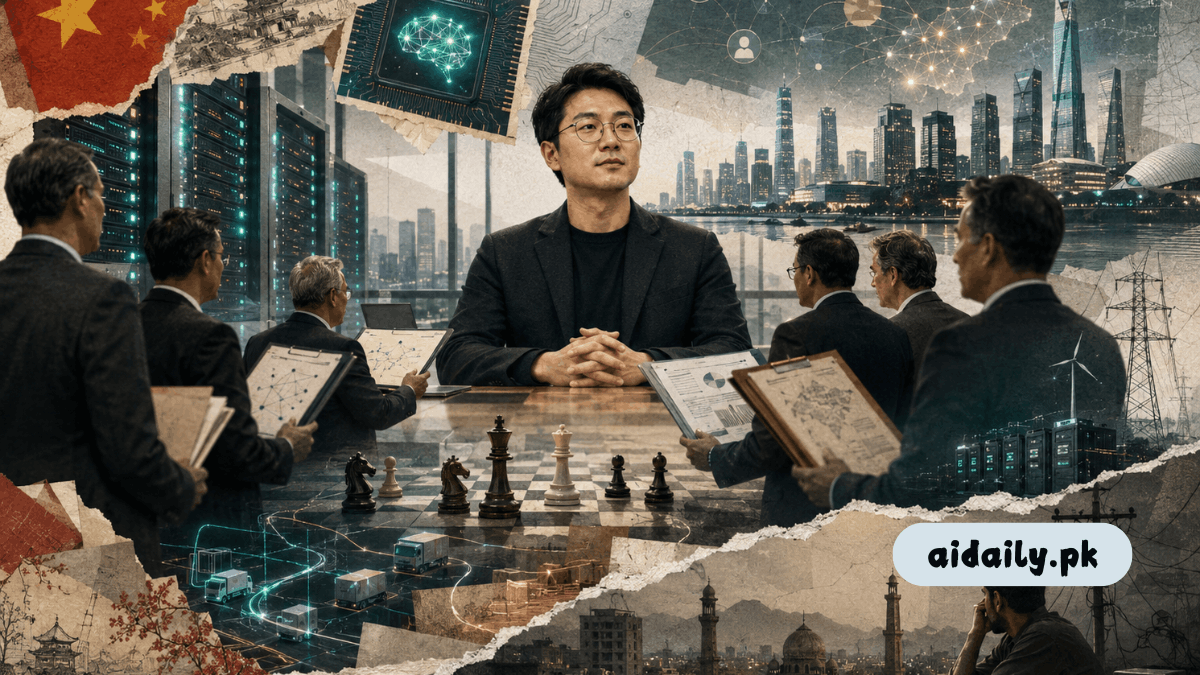
In my mind, I imagine the whole scene like a movie. A quiet conference room in Hangzhou. Evening time. Tea is served. Liang Wenfeng is sitting there calmly, with some files placed on the table. But these files do not just contain investor names. They contain what each investor can actually bring to the mission.
One file says data pipeline. Another says energy capacity. Another says user base. Another says logistics network. Another says gaming ecosystem. Another says hardware access. This is not fundraising. This is chess.
Then an assistant enters the room and says, “Sir, one more VC firm is here. Very big name. They are ready with 500 million dollars.” Liang looks up and asks, “What else do they have?” The assistant pauses and says, “Sir... only money.” Liang quietly replies, “Hmm. Tell them to come next month. We will see.”
And whether that VC firm gets a meeting next month or not, nobody knows.
This is not arrogance. This is clarity. When you build your company’s foundation with your own money, you understand the value of other people’s money. You do not worship it. You use it. You place it on the board like a chess piece.
Who Is the Real Hero of This Story?
The hero of this story is not money. The hero is not even the
400 billion yuan valuation, which comes out to around
16.44 trillion Pakistani rupees, or almost
16,440 billion PKR. Big number, yes. Crazy number, yes. But still, that is not the real hero.
The real hero is the thinking behind it. The thinking that says, “If I am building a product for the world, then the world’s resources should come to me.” The real hero is the confidence that says, “I do not need to impress investors. Investors need to impress me.” The real hero is the patience that says, “If AGI takes 10 years, then whoever joins this mission must be ready to stay for 10 years.”
Liang Wenfeng did not just take funding. He selected partners. He selected soldiers. And in this game, only those can become soldiers who bring weapons with them. The ones who arrive empty-handed are stopped at the gate.
And before someone gets emotional, let me say this clearly: I am not calling DeepSeek my papa. I am just saying what the reality looks like. If it hurts, then bro, it hurts.
And Pakistan? The AI Race Is Not Even Visible From Here
Now in the middle of all this, when you turn your eyes toward Pakistan, there is a strange silence. The kind of silence that makes you feel embarrassed. China is building AI companies that can raise 51 billion yuan through invite-only funding, and here in Pakistan, we still do not have one serious AI research lab whose name the world actually knows.
And please do not say Pakistan has no talent. We have talent. Students from LUMS, FAST, NUST, and other universities are doing amazing work in Silicon Valley, Dubai, Europe, and everywhere else. But the painful part is that many of those same talented people, when they stay here, have to fight with slow internet, load shedding, weak funding, missing infrastructure, and a system that still does not fully understand what AI even means.
China has companies like CATL ready to solve power problems for AI factories. Pakistan mein startup ko electricity chahiye hoti hai to UPS wala yaad aata hai. This is not a joke. This is our reality.
In the AI race, Pakistan has not even reached the starting line yet. We do not have serious policy, serious infrastructure, serious investment, or a proper national AI direction. And the biggest problem is that we still do not have enough people thinking like Liang Wenfeng — the kind of person who says, “I will do it myself.”
We are still waiting. Waiting for the government. Waiting for investors. Waiting for foreign companies. Waiting for someone else to come and build the future for us. But in this race, the one who keeps waiting does not even become a footnote in history. He is simply forgotten.
And honestly, while writing this part, my heart is crying a little. Because this is not just about DeepSeek. This is about what Pakistan is missing while the world is building the future.
DeepSeek’s story is not only a Chinese AI story. It is a mirror. And when Pakistan looks into that mirror, the reflection is not comfortable.
The world is not waiting for us. AI is moving fast. China is moving fast. America is moving fast. Every serious country is trying to build its own AI power. And we are still stuck asking basic questions.
So the real question is not whether DeepSeek will beat OpenAI or not. The real question is: when the next AI revolution happens, will Pakistan be part of the story, or will we just sit on the side and clap for others?
Because guru, history does not remember people who only watched the game.
History remembers the ones who built the game.